|
THRISSUR
POORAM - Prologue
Life in Kerala is
punctuated by the
annual festivals
dedicated to village
deities. These
post-harvest
festivals are an
occasion to break
out of the monotony
of daily routine.
The size and
importance of this
festival may vary
from small gathering
to mega spectacle
like Thrissur
pooram. There are
other Pooram
festivals in and
around the central
Kerala which may
stand better than
Thrissur pooram in
some respect .But
the beauty of
Thrissur pooram is
in every respect
Thrissur pooram
stands better than
the best.
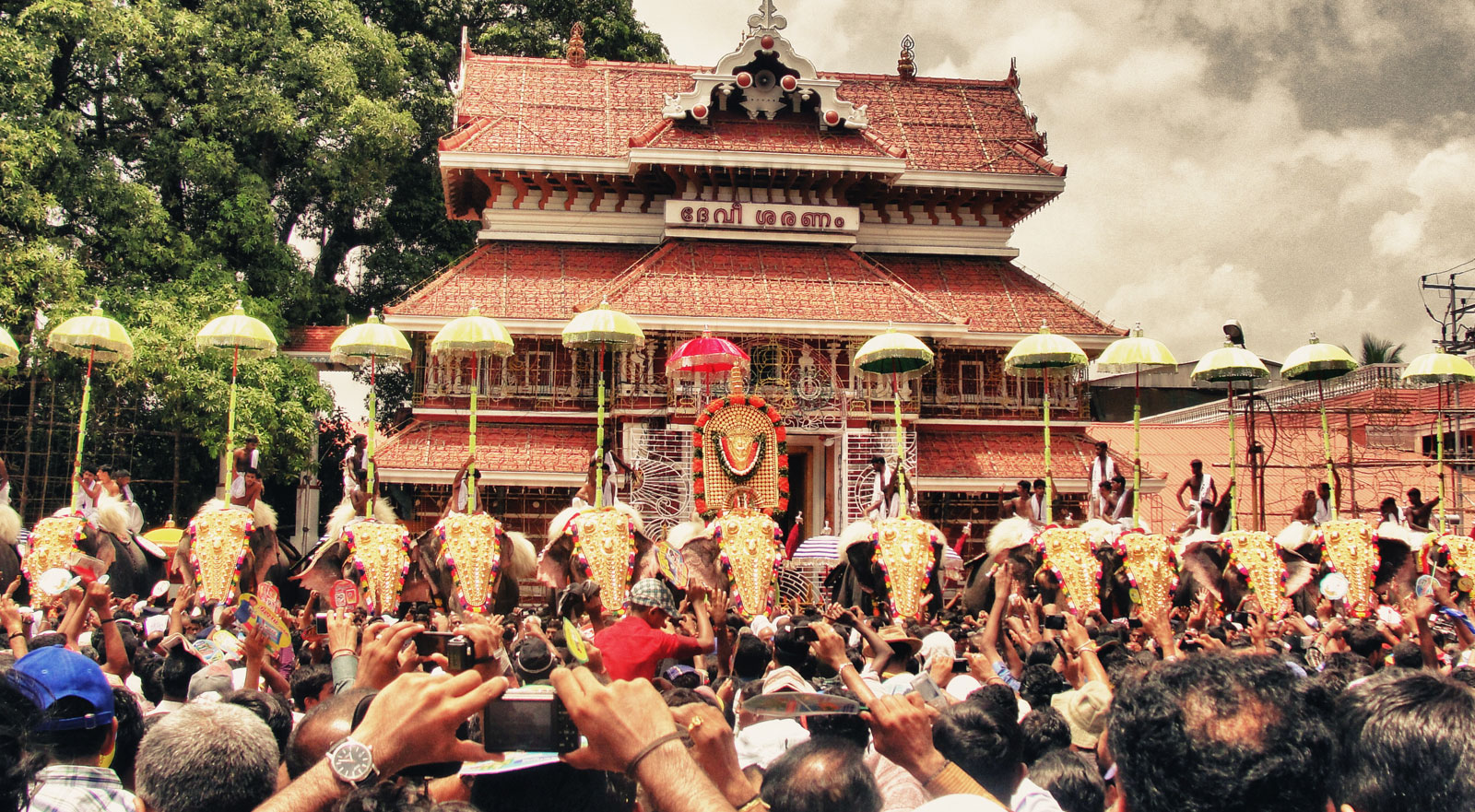
The Thrissur Pooram
is considered to be
the Mother of all
Poorams, a
culture highlight
that towers above
all other festivals
.Thrissur pooram is
a festival unique in
its pageantry,
magnitude and
participation. It is
not a mere temple
festival in its
strict sense but at
the same time it is
the festival of
festivals of Kerala.
The
Thrissur Pooram,
celebrated in the
Malayalam month Of
Medom
(April-May) is a
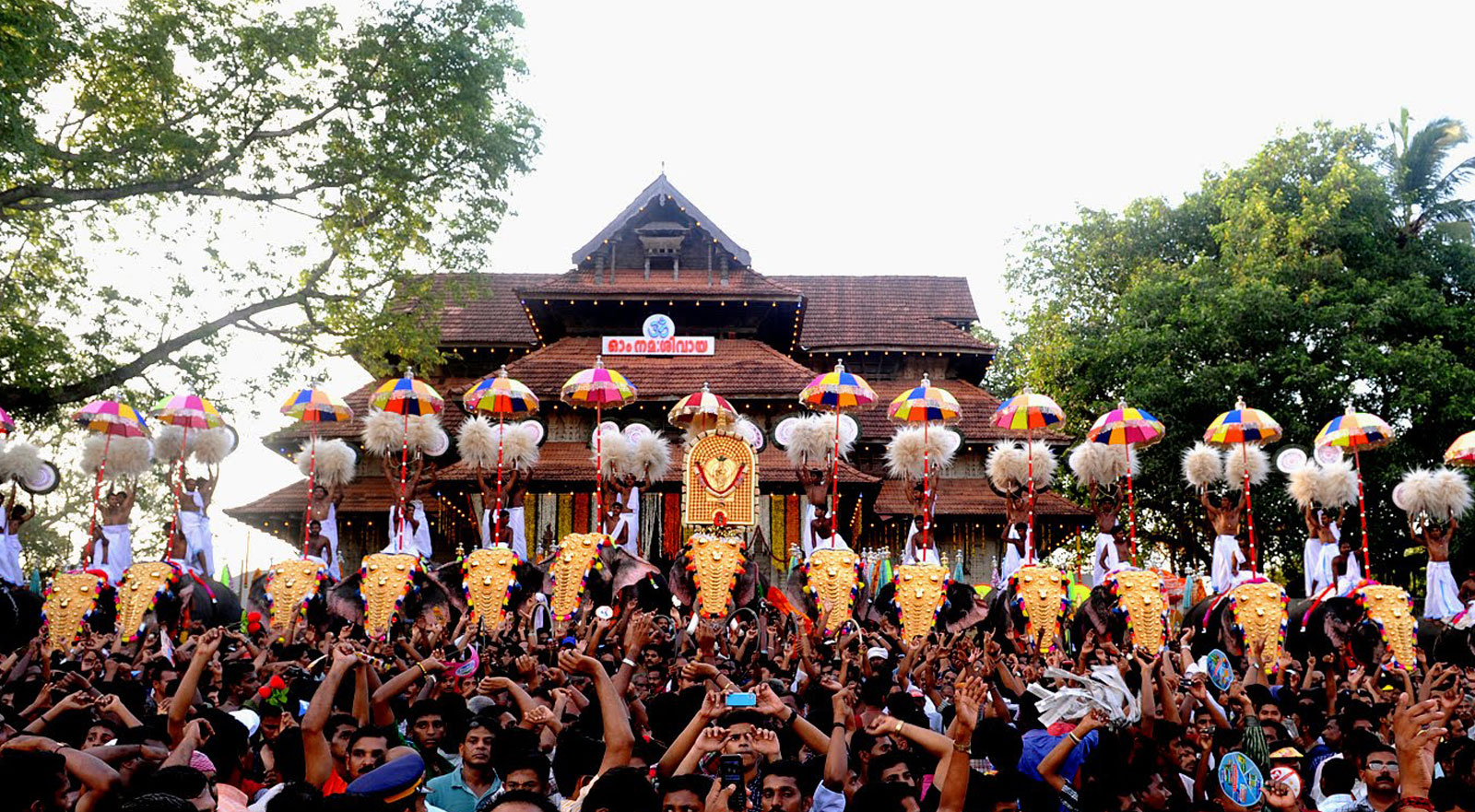
grand assembly of
Gods and Goddesses
in and around
Thrissur. These Gods
and Goddesses make
their visit to the
Vadakumnathan
Temple premises on
caparisoned
elephants
accompanied by grand
ensembles of
Chenda melam
and
pancha vadyam.
The Ten participants
of the Pooram are
the
Thiruvambady
Bhagavathi and
Paramekkavu
Bhagavathi,
Nethilakkavu
Bhagavathi,
Karamukku Bhagavathi,
Ayyanthole
Bhagavathi, Laloor
Bhagavathi,
Choorakkattukavu
Bhagavathi,
Chembukkavu
Bhagavathi,
Panamukkumpally
Sastha, Kanimangalam
Sastha. The
processions and
rituals of each of
these deities follow
a very strict
itinerary, scheduled
in such a way that
the tempo of the
Pooram celebrations
– 36 hrs non-stop-
is maintained
without any loss of
energy.
HISTORY
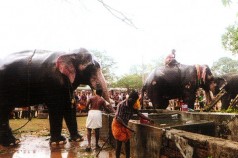
Very many stories are told and retold about the origin of Thrissur pooram. Thrissur pooram is 200 plus years young and before that the “Arattupuzha pooram” conducted at Arattupuzha, some 16 km away from Vadakumnathan was the biggest temple festival of Kerala. All the temples participating Thrissur pooram and Kuttanellore pooram was the regular participant of ”Arattupuzha pooram” .Once these temples were delayed to attend the festival due to heavy rain or so and then chief of Peruvanam Gramam denied the entry .As an act of reprisal Thrissur Naduvazhi the chief of Vadakunnathan, known as Yogadiripad and Kuttanellur Naduvazhi started the pooram in Thrissur. Later due to some reasons the Kuttanellur Naduvazhidisassociated the celebration at Thrissur. Since the withdrawal of Kuttanellur Naduvazhi the glamour of the pooram was lost and the two ‘Naduvazhies’ began to treat each other as enemies. It was in this juncture the former ruler of Cochin, His Highness Ramavarma Raja, popularly known as Sakthan Thampuran (1751-1805 AD) became the Maharaja of Kochi. Sakthan Thampuran unified the 10 temples situated around Vadakumnathan temple and took steps to celebrate Thrissur Pooram as a mass festival. Sakthan Thampuran classified the participants in to two groups the western and the Eastern The western group consist of Thiruvambady, Kanimangalam, Laloor, Ayyanthole, and Nethilakkavu temples. Paramekkavu, Karamukku, Chembukavu. Choorakottukavu and Panamukkamppilly comes under eastern group. The Maharaja re - organized the annual festival in its present form in front of Vadakumnathan. Sakthan Thampuran also directed the main temples at Thrissur, Paramekkavu and Thiruvambadyto extent all support and help to other poorams which are coming from 2 to 10 KM. away from Vadakumnathan temple. Recentaly the Kanimangalam changed to eastern side .The event management of the whole pooram was chalked out by His Highness Sakthan Thamburan and followed iota till now.
There is an epilogue to the “ Arattupuzha “ pooram participation . While the Arattupuzha pooram has a history of more than 1000 years , Paramekkavu temple is 600 years old and Thiruvambady is still younger.Further Thiruvambady bagavathy , Paramekkavu baghavathy and Neithalkavu bagavathi are “ Bhadra kali”deities.. Only Sastha’s or Durga’s are the participant of Arattupuzha pooram. The other seven participients of Thrissur pooram which’s ancientry dates back to early 8century A.D and are Sastha or durgha cult , may be regulars to Arattupuzha.
THE CURTAIN RAISERS
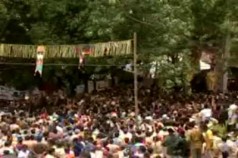
The city is in jubilant mood since the opening of the Thrissur pooram Exhibition. The exhibition is an excellent platform to educate, promote, advertise and sell the products. Informative stalls, pavallions, play stations and with active participation of both central and state governments the Thrissur pooram exhibition is conducted without interruption since 1964. The tempo starts with the flag hosting and in full spirit from day before yesterday of the Pooram day. It is in this day the sample fireworks are displayed in the vadakunnathan maidan. This is the curtain raiser to the real display of pyrotechnics of the pooram. Started as a sample testing of the fire works for alternation/ modification, it has turned to an event attracting very huge crowd.
Both Paramekkavu & Thiruvambady started to arrange their respective Parasols, Ornaments etc neatly in their stores which started to attract people in a large scale. Now it turned another curtain raiser to Thrissur Pooram. This “chamayakazcha”( Viewing the display of decorations &ornaments) is another amazing experience of pooram which is open for 36 hours. There is another curtain raiser to Thrissur pooram. The one among the Constituent PooramsNeithilkavu Bhagavathy is privileged to announce that the Thrissur Pooram is ON.The previous day of the pooram Devi enters the vadakkumnathan temple with all accompaniments, pays her salutation to Vadakkumnathan and open the southern gopuram which was closed on the previous pooram day after the “kudamattom”. Devi moves to western gopuram throughmaidan to sreemoolasthanam. Devi is received by the Cochin devasom board representative and escorted to nilappaduthara. Here the pooram is announced by play of conch thrice.
THRISSUR POORAM - THE
FORMAT
The participant
poorams are divided
into two parts
namely “Paramekkavu
side” and
“Thiruvambady side”.
The Paramekkavu side
consists of besides
“Paramekkavu
Bagavathy
1)
Pookattikkara-Karamukku
Baghavathy 2)
Choorakattukara
Baghavathy
3)Chempukkavu
Baghavathy 4)
Panemukkumpilly
Sastha. Besides
Thiruvambady
Baghavathy, the
Thiruvambady side is
having 1)
Ayyanthole
Baghavathy 2)
Nethilakkavu
Baghavathy 3)
Laoor
bagavathy 4)
Kanimangalam Sastha.
The Schedule : The 36 hour long pooram follow strict time schedule and prescribed
route to pay obeisance to Lord Vadakumnathan. The day starts with “Kanimangalam sastha” entering to vadakumnathan through southern gopuram and exits through western goupuram While chembookavu baghavathy, panemukkumpilly sastha and Paramekkavu bagavathy enters through eastern goupuram and leaves through southern goupuram.The poorams of Laloor, Ayyanthole, Neithalkavu, Choorakottukavu, moves tothekkinkadu maidan from Naduvilal(west) and enter vadakumnathan through western goupuram leaves through southern goupuram. Karamukku bagavathy moves through manikandanal(south) and enters through western goupuram and leaves through southern goupuram. Thiruvambady moves to maiden through Naikanal(North) and enters to Vadakumnathan through western gopuram and leaves through southern gopuram.
The night route is different since except panemukkumpilly &Chembookavu no other pooram enters to Vadakumnathan. Paramekkavu,karamukku, enters through “Manikandanal. Kanimangalam, Ayyanthole, laloor, neithalkavu, chhorakottukaventers throughNaduvilal while Thiruvambady through naickanal But all poorams conclude at “Nilapaduthara” near western goupuram.
The Paramekkavu & Thiruvambady stops their pooram for fire works at their pandals at manikandal and Naickanal at 2.30 am and starts at7.30.& 8.00 am from their respective pandals and concludes at Sreemoolasthanam at 11.30 & 12noon.
THE DAY
The pooram starts with the ceremonial entrance of “Kanimangalam Sastha” pooram through the southern goupuram at 7 am.This is followed by the arrival of Panamukkampilly Sathavu, Chembookavu Karthiayani Devi. Karamukku Karthiyani Devi, Choorakkottukavu Durga Devi, Ayyanthole Karthiayani Devi,and Naithalakavu Bhagavathi . Paramekkavu Bhagavathy andThiruambady Bhagavathy escorted by Krishna.
Paramekkavu pooram

The pooram day: The temple opens at 04 am after the routine poojas, Arattu at 6.00 am and other rituals connected to pooram, “nadakkal para” starts. At 12.30 noon Devi comes out and the famous “purappadu” starts with 15 elephants. The melam starts with “Chempada” (longest in duration and magnificent in performance) during these Kudamattam will be performed. The pandy will start at 2.00pm and the procession moves to “Vadakumnathan for the thrilling “elingithataramelam” .At 4.30 pm the melam concludes and the procession exits through southern gopuram “thripuda” melam will accompany the procession. The procession will face the southern gopuram stationing at the round ” .Meanwhile “thripuda will conclude after kombhupattu, and kuzalpattu “Panchari” will start. At 5.00 pm Thiruvambady bhagavathi will start decenting and the “Devine Durbar” will start with kudamattam.The greatest show on earth concludes at 6.45 pm and Devi returns to temple with “Nadaswaram”.
Night pooram stats at 10.30 pm with 7elephants with “Panchavadhyam”.The pooram moves through round west , round south and ends at Manikandanal pandal at 2.30 am.
After the fire works day pooram starts at 7.30am and moves to Sreemoolasthanam with 15 elephants .Another thrilling experience with “pandy melam” and kudamattam pooram concludes at 11.30 am. After the touching farewell with Thiruvambady bhagavathi Paramekkavu Bhagavathi returns with jubilant crowd to abode.
After “parayeduppu” and arattu at “pandijarchira” (western pond) Devi returns to temple and will be received with pandy melam. After kodical pooram Devi takes rest with uttrampattu.
Thiruvambady
pooram
The temple opens at 3.00 am after routine poojas and "usha Seeveli" the “nadakkal para starts”. At 7.30 am Devi starts for pooram with Lord Krishna’s “kolam”and devi’s thidambhu.The ensemble moves through shoranur road naickanal,Naduvilal and old nadakavu to Brahmasom Madhom. After erakkipooja the pooram starts with 3 elephants and “ Panchavadhyam”. This famous “madathil varavu”will starts at 11.30 and will play 2 thalavattom in 3 kalams which will be spread over 100 mts. The pooram will enter the western round through pazhayanadakkavu and 4 more elephants join .The sweet and splendid Panchavadhyam will conclude at Naickanal pandal at 3.00 p.m. The procession will move to “sree moolasthanam”with 15 elephants and “ pandy melam”.The melam concludes at 5.00pm and enters to Vadakumnathan temple. The famous Divine durbar will starts at 5.30 pm facing the Paramekkavu bhagavathi in front of the southern gopuram..After the “ kudamattam” bhagavathi moves to “Madhom” for “ irakky pooja”.
The night pooram starts from madom at 11.30 pm with panchavadhyam and ends at naickanal pandal at2.30 am . Devi watches the “ fire works from 3.00 am to 6.00 am and starts the procession at 8.00 am to vadakunnathan with “pandy melam”. The pooram concludes at 12noon After the fare well devi returns. In the evening devi takes holy dip at padijare chira and returns the temple at 7.pm. After “kodikuthu” the pooram concludes.
Kanimangalam pooram
The temple can be reached by road , hardly 300meters from Old gate stop, kanimangalam and through Ayyappankavu road.
The kanimangalam Sastha is supposed to be the deva guru ,who is allergic to sun and rain . Simple sreekovil with towering gopuram and small but beautiful pond,surrounded by kole land Sastha temple is famous for its ambience too.
An equally important temple Methevar Siva temple is just 100 meters away from this temple . Consecreated by “ Thachanat” Moos and on decline of this family, these temples were merged to Valiyalukkal Group devaswom managed by PanmukkathuMaliyekkal Naduvazhy.This legendory naduvazhy forcibly brought 7 gold accruements and a gold Kolam from kuttanellore pooram to please erstwhile raja of Kochi.. The legend may be the part of the rivalry between kuttanellore and thrichur which in turn caused the decline of Thrissur pooram.
Starting its journey on pooram day at 5 O'clock in the morning from the temple accompanied by Nadapandy and Nadaswaram and reaches Kulassery temple at Veliyannur. With 9 elephants , it reaches to round south from were it turns east and enter through Southern Gopuram of VadukkumnathaTemple .and reaches Elinjithara. The kanimangalamsastha normally charterised as the guardian pooram is the only other pooram which is allowed to perform pandy melam at elanjithara Sree Vadakkumanathan pay great respects to Deva Guru and honour him opening Lord’s Thirunanda. The pooram passes through western gopuram to Sreemoolasthanamwere the Pandymelam at its brisk point performed and finally ends the day pooram. The lord takes rest at kulassery temple
By evening at 7 p.m. with panchavadhyam and five elephants ,the Pooram starts from Kulassery temple and moves to sreemoolasthanam by round west , naduvilal. 9 o’ clock the pooram concludes and the lord returns to kanimangalam. The next day with , parayeduppu arattu, kodical pooram and kodikuthu celebrations concludes.
Chembukkavu Pooram
The temple is one among 108 Durga kshetras " Vigneswara and Dharma sastha are sub deities here.The temple is about 2.5 km of north west of vadakkumnathan Since the deity is allergic to sunstroke is forced to return on pooram day before the temperature rise and pleased to travel again in the wee hours according to legend . However the foremost offering is "Nai Vilakku" (Ghee is used instead of oil to lighten the lamp) in this temple substantiate the story of "Headache". The chieftains of the foremost among the 32 grammas of Kerala ( to be translated as corporations) Thrissur Namoodiries and Dutches had a long legal battle about the ownership of this temple. The history long back to 280 years. Another version of the story is simple, innocent and straight forward namboodiri families were drawn to this politics between His Excellency of Kochi & the Dutches.
It is believed that while digging for foundation the parts of this Kshetra was found and hence this temlple. The ooralan was Cungrathmenon family. Sri Kathiayani temple at Chembukkavu coming under the direct control of the Cochin Devaswam Board. With its proximity to the Paramekkavu and Thiruvambady temples and its rich tradition of giving spiritual solace to hundreds of its devotes, the temple plays a major role in the Thrissur Pooram .The temple had a face lift through the “ naveekaranakalasa” during 2009.
The day starts with arattu and other rituals. Pooram starts at 7 am with Panchavadhyam and nadaswaram and three caparisoned elephants the procession moves to Pooramparambhu through palace road. Bhagavathy enters through eastern gopuram to the Vadakumnatahan and complete the Panchavadhyam near southern gopuram. With melam Bhagavathy descents through the gopuram. And the day pooram ends. Since Bhagavathy is allergic to sun stroke, Devi returns to the temple in a hurry through Naikanal. The night pooram exits through western gopuram and ends at Nilapadu thara. Next evening with arattu, kodikkal pooram and kodikutthu the celebration concludes.
Ayyathole Bhagavathy another constituent of thrissur pooram pays a visit to Chembhukkavu Bhagavathy. The very next day after the kodiyettom Ayyanthole Bhagavathy pays a visit to Chembhukkavu temple and Chembhukavu Bhagavathy returns the visit. To mark the occasion a sandal wood piece is taken from chembhukavu by Ayyanthole Bhagavathy and in return a plate from ayyanthole by Chembhukavu Bhagavathy.
Panamukkumpally Pooram
The Panamukkumpally Dharma Sastha Temple is situated about 2 kilometers east of Sree Vadakkumnathan Temple Thrissur. The idol, which is said to be 2500 years old, symbolizes Sree Dharma Sastha mediating in Padmasanam with a pot filled with Amrit A rare posture of Lord Sastha. The sub deities of the temple are Lord Shiva, Vinayaka and Nana Durga. It is believed selfless devotion and prayer, with complete dedication to the Lord Sastha can cure even major diseases. It is also very auspicious to begin education of children in divine presence.
Thekkemadom Swamiar who migrated to Thrissur constructed this temple atKizhakkumpattukara for "SRI AYYAPPA" which they have brought along with. The decedents of Madom make customary visit to the Temple and offer Pushpanjalis to the Lord.
Years later, the Prominence of the Madom faded and that administration was handed over to Bharanasamithi elected by the devotees of Kizakkumpattukara
This temple stopped to participate in Thrissur pooram in early 1900 A.D due to some silly excuses . With right support and guidance from thrissur pooram ekopana samithy, panamukkumppilly pooram was rejuvenated during 2002 and raised to full vigour by 2006.
The Panamukkumpally pooram will start at 7 a.m from the temple with 3 decorated elephants accompanied by Panchavadhyam and Nadaswaram via East Fort Junction , college road and turns towards north and enter into Sri Vadakummnathan Temple via Eastern Gopuram .The panchavadhdyam concludes near southern gopuram .The same Process would repeat and the pooram ends in front of eastern gopuram in the night . The next day with kodical pooram the celebration concludes.
Karamukku Pooram
The famous Pookkattikara-Karamukku Temple is situated 5 kilometer from Vadakkumnathan Temple under Thrissur corporation. Through Ernakulam route or Thrissur - Kodungallur route the temple can be reached. Pookkattikkara - Karamukku Temple is built around paddy fields accompanied by the 2 acres wide "Karamukku Pond" a reservoir which is very helpful for perennial water supply for residents of the area and for sacred bath for devotees.
This temple is a multi temple viz, Pookattikkara Siva temple & Karamukku Bagavathy temple. The earlier temple was in the southern side of the "Pookattikkara" village and brought to this place. Lord Parasurama brought some Namboodiri families from north Malabar to do the "Poojas" of Sri Vadakkumanatha temple. It is believed that this family brought their family deity "Lord Siva" along with them and hence thePookattikkara temple. Karamukku Bagavathy is one among the 108 Durgalayas by Bargava Rama. The Karthiyani Devi along with her brother Krishna is the main deities of karamukku temple. Edampiri Ganapathy, Nandi (the holy bullock) and Siva are the deities of "Pookattikkara" Temple. When this is combined the Pookattikkara-Karamukku temple. Two prominent double Vatta SreeKovil (holy shrines) , and another single Vatta Sreekovil is the the miniature of Sree vadakkumanatha temple.
The three balikallus shows the importance of this temple.
The temple is the holy sum of three divine powers- Saiva, Vaishnava Saktheya. It is believed that “Khara” the saint who was the chief architect of many temples was stationed here.
Another story is related to Ramayana. Khara an Asura warrior specialized in bow & arrow, challenged Lakshmana, for mis behaving Khar’s half sister “Soorpaneka”. The battle lasted for months finally khara was defeated . kara took assylam in this large pond for days to heal and hide . Khara mukku turned Karamukku
While living in exile at Maliyekkal tharavadu, Sakthan thampuran used to take bath in this pond . Thampuran had a soft corner to this temple and when he returned to power he took over this temple complex Thampuran allotted 200 acres of paddy fields to maintain the temple.
On the seventh day after Tantric Poojas. Karamukku Bhagavati’s "Ezhunnallippu" starts Pooram muhurtham at 5 a.m. Along with "Nadaswram" and Nadapandi, the Ezhunnallippu reaches Kulassery temple. 3 elephants with Pandymelam the possession reaches "Manikanatanal Pandal" at 8 O' clock. Here number of elephants increases to 9. The pandy melam witth more than 150 members moves to sreemolasthanam. This is the curtain raiser of famous "Elinjitara Melam". The Pandimelam will be over by 9.30 a.m. at "Sreemoolastanam" and the deity go inside temple to pay respects to Lord Vadakkumanathan and exit to Southern gopuram. and returns to Kulassery Temple.
Night pooram . In the evening 7p.m the pooram starts from kulassery temple .With panchavadyam by more than 60 members and 3 elephants the pooram moves to sreemoolasthanam though manikandanal .Pooram ends at 10.p.m and after paying a visit to " Nilapaduthara" devi returns to chiyyaram .
After proper rest in the day by evening after "Aarrattu" at Karamukku pond. "Utram Vilakku" Ezhunnallippu begins with 3 elephants. Pachari melam and fire works are the main attractions which is up to 10 P.M. With Tantric Pooja and Utram Pattu devi takes rest. Flag at temple and at Ollukkavu junction hoisted by devotees are driven down by the elephant with great jubilisation.
Laloor Pooram
Laloor Sree Karthiyayini Temple is one among 108 Durgalayas by Saint Parasurama. The idol is Chathur bahu vigraha This temple is located at Laloor, 5Kms away fromSree Vadakumnatha temple in south - west direction. Laloor Sree Karthiyayini temple is distinct in many ways. There is no sub - shrines in the temple. The size of the "Valiya Balikkallu" is nearly 8 Feet high which shows that the type of prathistha. Temple architecture is closely connected to Sree ramatemple in Vadakkumnathacomplex. The priests were from the same family who were head priest of Sree Rama temple The mural paintings are in the shrines. The Kerala style of architecture, the gothic style of mural painting of the temple are without any parallel. Once the temple was owned by Mannath family. Due to various reasons the temple started to decline .
After naveekaranakalasa and renovation the temple has returned to its earlier stage now
Laloor:Gramadevatha of "Aranattukara" . Ooralan: Moolathadam Nair Family.
Laloor pooram has the privilege of the first pooram to hoist the pooram flag before noon of the "Kodiyettam" day. System followed is "Padahadhy" style. The next day o f "Kodiyettam" Laloor Bhagavathy, after daily rituals travels to Pookkattikkara -Karamukku temple. After the poojas there, Devi travels back to Laloor along with Karamukku Bhagavathy. It is believed that this courtesy call to fellow pooram participant was another extinct rituals where all ten participants followed once.
Laloor Pooram: On the seventh day after Tantric Poojas. Laloor Bhagavati’s "Ezhunnallippu" starts Pooram muhurtham at 6.30 a.m. Along with "Nadhaswram" and Panchavadhyam with five elephants, the Ezhunnallippu reaches at Naduvilal of Swaraj round. During the course of time the number of elephants increases to nine. The melam starts procession moves to Sreemoola Sthanam withPandymelam and ends at 10.30 A.M. the deity go inside temple to pay respects to Lord Vadakkumanathan and exit to Southern gopuram and returns to Laloor.
Night Pooram starts at 6.30 p.m from the temple and the day time routine is repeated. Next day after "Kodikkal Pooram", "Kodikkuth" and "Uthram Pattu" the celebration ends.
Choorakottukavu Pooram
Choorakkottukavu Sree Durga Temple situates under the valley ofvilangankunnu, the famous Tourist Kendra in Trichur. It locates on the Eastern side of Trichur- Kunnamkulam Road. The distance from the Temple to Trichur town is only 8 K.M. this is one of the oldest Temples in Kerala. According to mythology the "Prathishta" of this Temple was done by Parasurama.
. After passage of time the temple started to decline . Once a senior member of appat family found this deity covered with choral bushes.Then the public realized there is some sanctity for the place and a Temple was constructed there. One of the peculiarities of this Temple is that there is no roof for the Sanctum Sanctorumand subshrines
On the Trichur Pooram day at 6.30 A.M. Bhagavathy with all pomp and pageantry goes to Trichur Town accompanied by "Nadhaswaram". The villagers and devotees follow to participate in the pooram. Pakal Pooram commences at 9.30 A.M. and ends at 11 A.M .After pakal Pooram Bhagavathy takes rest in Paramekkavu Temple. The Paramekkavu pooram will start only after the choorakkottukave Bhagavathy reached in the Paramekkavu."Rathri Pooram" commences at 10 P.M. and ends at 12 o clock. On both occasions Chenda artists perform "Pandimelam". Immediately after "Rathri Pooram" Bhagavathy returns to temple. On the next day with "Kodikkal Pooram" Pooram celebrations come to an end.
Ayyanthole Pooram
The temple is at ayyanthole some 1.5 km from the dist. headquarters Civil lines .
The temple is one among the 108 Durgalayas.Lord Vishnu was born as the child of Devaki as Sreekrishna and the Adi parasakthy as the daughter of Yasodha. As directed by an oracle Vasudeva exchanged the new borns. As usual Kamsa tried to kill the new born baby by striking it against a rock. Mahamaya escaped from the hands of Kamsa by pushing on his shoulders . this concept is “ Karthiyani” as per “ mahabagavatha” Ayya means “ Kamsa” and “thole “ means shoulder and the combination is the Ayyanthole. The beautifull mural paintings decorate the walls of sanctrum sanctoram.
Naveekarana kalasa was performed and the towering gopuram is about to be completed.
On pooram day Pooram, Devi sets out to Vadakkumnathan on the elephant backs at 6 a.m. accompanied by Thavil, Vadya, thala and Mela. All the people of the area including the friends and relatives assembled in the temple sufficiently early to have a glimpse of the spectacular possession and show of divine splendor. It is the custom of the people to accompany the Devi to some distance and also decorate the street with flowers and place lighted traditional lamp (Nilavilakku/Nirapara) on either side of the road along which Devi may pass. There will be three elephants and Nadapandi until the possession reaches Kottappuram Railway bridge. From railway bridge two more elephants are added and Panchavadyambegins when it reaches Naduvilal point, the number of elephants rises to Thirteen and Melam starts pooram moves to Sree Moola Sthanam and cocludes. Devi enters into the Vadakkumnathan temple after worshipping Lord Siva, comes out through the southern gateway. The whole process is repeated in the night as well. The next day after the Uthram Vilakku in the night, with the de-hoisting of the temple flag, the pooram celebrations comes to an end.
Naithalkavu
The myth behind the arrival of the Naithalakkavu Amma to Kuttur is that she came along with “Kunddil Nambiddi” from Arimbur, a place west to Thrissur. Kunddil Nambiddi during his pilgrimage came to PallipuramSiva temple and placed his umbrella down near the temple, after which it became impossible for him to lift it. Knowing that the Amma liked to stay on the same place near Siva, she was installed on a plate having NAI(ghee) with sesame lamp (Thila in Sanskrit). Thus the name Nai-thila- kavu became popular. She is the regional deity of Kuttur, Pamboor & Attoor.
There is no roof on the sanctum sanctorum of the Naithalakkavu Amma.
The sanctum sanctorum of Shiva in this temple is one of the largest rounded sanctorum in Kerala. Besides Siva and Naithalakkavu Amma,Sri Durga, Shastra, Ganapathi, Anthimahakalan, Rashasu &Dampathu Rashasu is been present as Upadevas. A Rashasu namedKelumman is installed under Alstonius (Pala) tree outside the walls of the temple. The Naithalakkavu Amma is faced towards west, while Siva is faced to east direction. It is an important temple among Vadakkunthan’s Rishabhagiri temples.
Naithalakkavu Pooram
On pooram day Devi starts from the temple by 8.30 am with Nadaswaram and nadapandy.At naduvilal Ganapathy temple there is an“ erakky pooja”. The no: elephants will increase to 11 and with pandi melam Devi enters to maidan at 11.am.The melam will end at sreemoolasthanam at one noon and Devi moves to vadakkumnathan and leaves through southern gopuram. Devi takes rest at karthyiani temple near Naduvil madom , Pazhayanadakkavu.
Night pooram will start from the Karthyiani temple at 11.p.m and through Naduvilal enters to maidan with pandi melam and stops atsreemoolasthanam by midnight one o clock. Devi returns to the neithal kavu temple and reaches at 3 a.m
In the evening, after arattu , kodikkal pooram the celebration comes to an end .After announcing the pooram on the previous day of thrissur pooram bhagavathy pays a visit to Thiruvambadi and moothedathu man and returns to the abode .

CONSTITUENT TEMPLES
OF THRISSUR POORAM
Apart from the
principal deities of
the
Paramekkavu and
Thiruvambadi, eight
other temple deities
participate in the
Thrissur Pooram: six
Goddesses and two
from temples
dedicated o Lord
Sastha. They are
the
Kanimangalam and
Panakkampilli
Sasthas, and the
Bhagavathis from
Pookkatikara,
Choorakotukavu,
Laloor,
Naithilakavu,
Ayyanthole and
Chembukavu. The
Kanimangalam
Sastha is the
first
God " - who is the
incarnation of "Brahspathi" (Deva Guru)"
- which
is the premier pooram entering
Sree
Vadakkumnathan.
It is interesting to note that only Sastha & Devi are participating in the pooram , may be because of Dravidian influence prevailed that time. There is four nos of siva temples, four nos of durga temples and four nos of large ponds are situated at nearly equidistant from the Sree vadakunnatha temple, the silent spectator of the pooram. Siva temple are "Erattachira –South, Chirakkal- west Asokeswaram –North& Midhunapilly –east. Durga temples are Pookkattikkara – karamukukku, Chiyyaram-South, Laloor south west, Ayyanthole, North west Chembookavu - Northeast.

THRISSUR POORAM
Pooram originally
denotes the
nakshatram or star
of the Malayalam
month in which the
festival is
celebrated. It was
on pooram days that
temples in Central
Kerala held their
annual festivals
honouring their
deity with
processions of
caparisoned
elephants and
percussion
ensembles.
Pooram festival
season begins in
November and extends
up to May. Although
there are hundreds
of pooram festivals
in this season, the
most important one
is the Thrissur
pooram which is
celebrated on the
Pooram Day of
Medom
Month of the
Malayalam Era
(mid-April to
mid-May).
Another Pooram of
similar significance
is the
Arattupuzha
Pooram which falls
on the Pooram Day in
the previous
Malayalam Month of
Meenam.
Pooram festivals are
also conducted on
other days of the
month all over
Kerala, the unifying
factor being the
small processional
image of the deity,
called the
thidambu,
which is placed at
the base of a golden
shield-like
kolam,
which is mounted
atop the tallest
male tusker and
flanked by other
elephants. Though
the minimum number
of elephants will be
three, in the bigger
festivals it can be
as many as
twenty-one or more.

THE FIREWORKS
DISPLAY
Fireworks are an
essential part of
almost all events in
Kerala .But in
Thrissur Pooram; the
fire works are
distinct in
character,
performance,
excellence and
magnitude. Both Thiruvambady
and
Paramekkavu temples compete with each other to provide the
crowd with the best
and the most
unexpected.
People
come from faraway
places to watch this
amazing display of
pyrotechnics.
There are four major
firework displays in
Thrissur Pooram. The
‘sample fireworks’ on the day before the Pooram, the
colorful sparklers
that light up the
sky (amittu)
by both sides on the
Pooram evening after
the Southward
Descent, the most
impressive event
that mark the peak
of Pooram
celebrations in the
early morning hours,
and the final
fireworks the
following noon after
the Goddesses bid
farewell to each
other that mark the
end of Pooram.
The chemistry : The technique is a mixture of sound, light and strength, the proportion may vary according to the type –say amittu( less sound more colour full), dynamite (High pitch sound only) Earlier potassium chlorate was used to increase the loudness and was replaced by potassium nitrate since earlier is more accident prone. The colour full display of amittu was started in Thrissur pooram . Thanks to Dr.T.C. Krishnamenon for his able guidance.
Some of the combinations Stonshiam Carbonate – Dark Red Lithium Carbonate – Light Red Calcium Chloride - Orange Sodium Nitrate - Yellow Barium Chloride – Green Copper Chloride –Blue Titanium and Aluminum – White This is only a guide line and proportion is the skill of the technocrat and Aluminum powder, magnesium etc are added to give some gimmicks.
According to
sources, an active
member of Thrissur
Pooram committee
witnessed a Chinese
firework display
during his visit to
the Park Fare
Exhibition at Madras
about 80 years ago.
Inspired by the
spectacle, he
brought some items
of Chinese fireworks
to Thrissur like
poothiri,
lathiri,
moolipeevu,
vaanam
etc. It obviously
fired popular
imagination and in
no time, the art and
craft of fireworks
was taken up by
enterprising
indigenous families,
who developed it
into the pulsating
event that it is
now. Every year new
and
never-seen-before
items are added to
the fireworks, with
both the temples
devoting a large
share of resources
for it.
The earliest masters
of fireworks
display, like
Kuriya,
Ponnuveetil
Gopalan
Nair,
Vellattu
Narayana Panicker, Chelapadan
Anthony,
Vadakkethala
Kochapu
etc were not
formally or
technically trained
in the art. They
learned it through
experience and
experimentation and
virtually developed
it into a major
industry. All the
fireworks-managers
of today are the
followers of these
pioneers. For a long
time the
responsibility of
the
Paramekkavu
fireworks was vested
with
Karayarakattil Jose, who has now retired from the scene.
It was only in the
early 1970’s that a
fixed schedule for
fireworks display
was introduced.
Until then whichever
party - Paramekkavu
or
Thiruvambady
- that reaches the
pandal
first would begin
their fireworks
display. As this led
to a lot of
misunderstandings
and also untoward
incidents, a
rotation system was
introduced.
According to this,
each temple would
take turns to light
their fireworks
first. From then on,
both the parties
have followed this
system.
The fame of the
Thrissur fireworks
crossed boundaries
and reached USA and
a master was invited
to display fireworks
in connection with a
presidential Sworn -
in USA
The Trichur
Pooram Exhibition
The Trichur Pooram
Exhibition, yet
another major
attraction of the
Pooram
is The
Trichur
Pooram Exhibition
one of the biggest
Trade Fairs in south
India . It is an
all-India exhibition
that generates
significant revenue
for the Pooram organisers. The
Exhibition which
starts a month
before pooram was
conducted in the
vicinity of
Vadakumnathan.
Venues and
organizers changed
during the course of
time.
Thrissur
Municipality,
entrusted Y.M.A to
run it in the year
1933 and afterwards
to the stadium
committee. In the
1964 the two groups
of temples requested
the municipality to
allow them to run
the exhibition to
meet the expenses of
Thrissur
Pooram.
In this year these 9
temples joined
together ( the 10th
pooram
Panemukkuppily
stopped long before
this ) and refused
to stage their
respective
poorams
in support of this
demand .That year
all temples staged
the pooram with one
elephant just only
to meet basic temple
rituals. This hurt
the feelings of
devotees, traders,
artists, artisans
and people of all
walks of life,
Tourist Development
Corporation,
Thrissur
Municipality
,respective
Panchayaths
and
Government in
general. They
started negotiations
with these 9 temples
through their office
bearers and
ascertained from
them the hardships
experienced for
conducting the
Pooram.
Ultimately Thrissur
Municipality
admitted the demand
of the 9 temples was
just and genuine and
the right to conduct
the pooram
exhibition was
handed over to”
Pooram Nadathippukar”
( the people who are
authorized to
conduct
poorams).This
exhibition is the
showcases
of pavilions and
stalls of major
commercial,
industrial and
entertainment houses
in the country.
The exhibition
profit could be used
exclusively for
conducting Thrissur
Pooram Festival but
unfortunately this
was diverted for
other purpose and
only a part of it is
used for Thrissur
Pooram Festival.
This is against the
principle of
“philanthropic
Purpose”. At the
same time the
Constituent Poorams
of 8 temples find it
very difficult to
celebrate their
festival with pomp
and decorum as the
office bearers of
these temples feel
hardship and
financial
difficulty.
Under these
circumstances the 8
temples put-up their
demand for
participations in
the exhibition
committee and equal
share from the funds
generated from it
.As the demand
turned to civil case
and interim
judgment, the
respective
Exhibition
committees started
to give small
contribution to 8
Constituent Poorams
annually
The Thrissur
Pooram Exhibition - 2013
(Golden Jubilee year)
50th All Industrial, Agricultural, Educational & Cultural Exhibition Under the joint auspices of the Paramekkavu & Thiruvambady Devaswoms
Office : Thiruvambady Devaswom Building, Round West, Thrissur - 680 001, Kerala
Phone : 0487 - 2426020, 3216631 Fax : 0487 - 2426020 Email : thrissurpooramexibhition@yahoo.in
PERIOD 1st April to 22nd May, 2013THRISSUR POORAM 21st April 2013, Sunday
VENUE Thekkinkad Maidan (Vadakkunnathan Temple Maidan)
OTHER ATTRACTIONS
Apart from the
Thrissur Pooram
another local
attraction is the “Puli
Kali” (Tiger
Play) and “Kummatti”
(Mask Dance) that
form part of Onam
celebrations, the
national festival of
Kerala (Aug-Sept).
These consist of
enthusiastic
processions of men
painted and made-up
as tigers, all
members of different
clubs that organize
the event. Thousands
gather to watch the
‘tigers’ dancing to
the beat of drums.
The biggest and
tallest church in
South Asia Our Lady
of Dolores popularly
known as the New
Church [Puthenpalli]
and the first
Catholic Church in
India,
Metropolitan of the
Chaldean Syrian
Church
(the name used for
the Church of the
East in India) are
other places to note
in Thrissur
The foremost mosque
in India
Cheraman
masjid
which is
dated back 7th
century AD, is in
Kodungallore of
Thrissur Dist .The
internationally
acclaimed
Kerala Kalamandalam,
a state academy for
the promotion of
classical arts is
also situated at
Cheruthuruthy,
around 30 kms from
Thrissur town.
Kerala Sahithya
Academy, Sangeetha Nataka Academy and
Kerala
Lalithakala
Academy
(State Academies of
Literature, Fine
Arts and Theatrical
Arts) are head
quartered at
Thrissur making the
epithet ‘cultural
capital of Kerala’
really significant.

IMPROVES /
MODIFY THRISSUR
POORAM
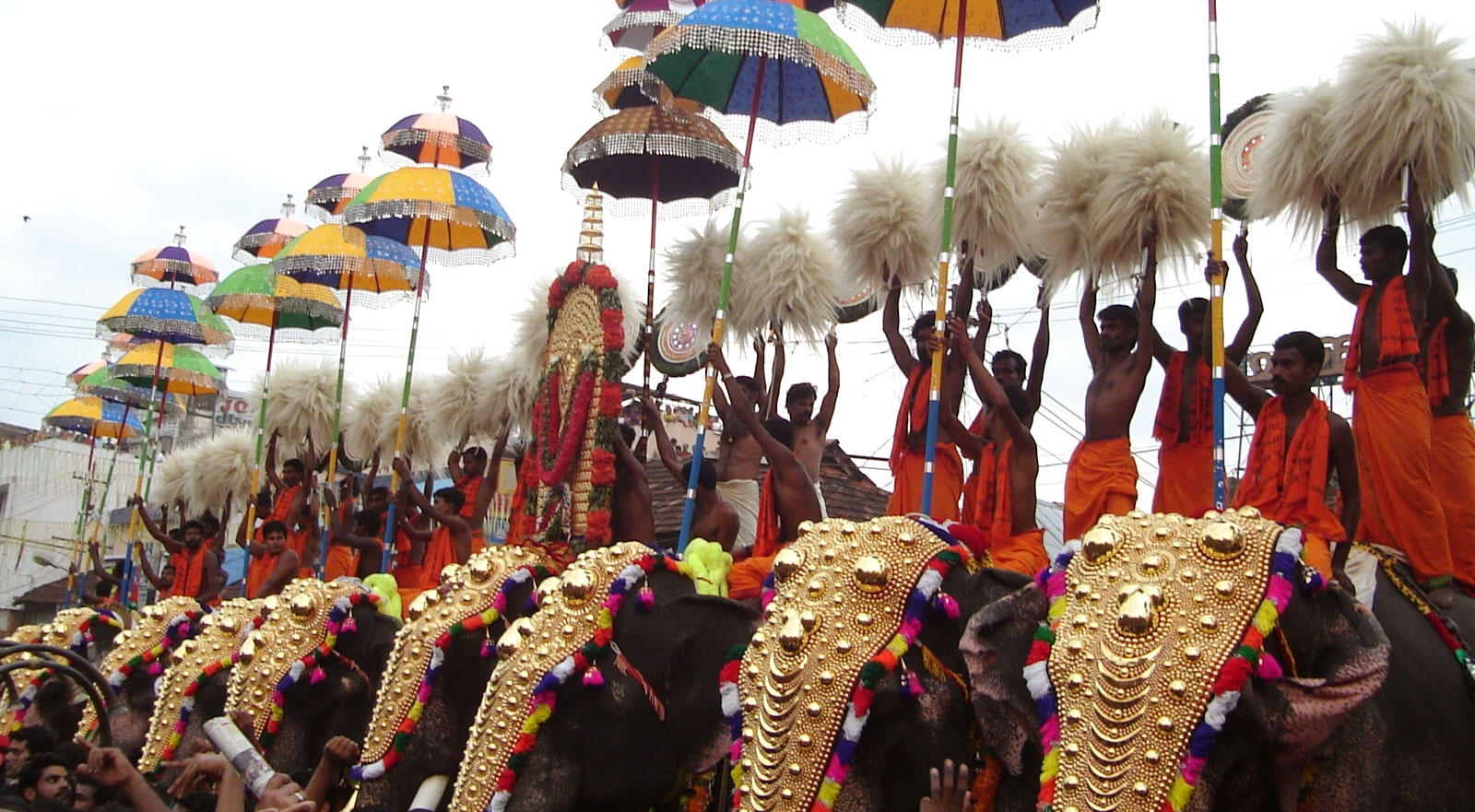
The grant show of temples in the vicinity of the vast Vadakkumnathan temple was started in the present form by the great visionary the Sakthan Thampuran, the ruler of the Cochin State. Now the pooram is celebrated with processions from various temples consisting of caparisoned elephants decorated deities embedded in golden Kolams held with colorful specially prepared large umbrellas and Alavattam made out of peacock feathers and Venchmarams. Each of these decorative items are held and exhibited according to the beating of drums by trained men sat over the elephant.
The accompaniment to
the elephants
stationed in front
of elephants
consists of
drummers, officials
of the temple and
residents of that
particular area
mostly the devotees
of that temple .as
Thrissur pooram has
become one of the
greatest attractions
of the people not
only from Kerala but
also from other
countries of the
world, the
responsibility of
the local
administration and
the organizers have
become much more
than the usual
rituals. Now they
are trying to
improve the show by
adding improved
themes in the show.
This will also help
to minimize the
monotony of locals
who throng to the
venue every year.
The madomthil varavu (panchavadhyam) of Thiruvambady and : Elinjithara melam ( pandi melam) of Paramekkavu should continue like this. The pakal pooram ( day pooram) at Sreemoolasthanam “pandi” by Thiruvambady. either it may be changed to “Panjari” or the “Panjavadhyam“ may continue” till the end.
Night pooram both Paramekkavu and Thiruvambady is on Panjavadhyam. Night it is better.
Again second day .Paramekkavu may try “Panjari” and thiruvambadi as usual “Pandi”
Spectators will have choice and core competency of the artists will be evaluate
Since Thrissur
pooram is commonly
known as drum
criented festival,
the improvements
should be limited to
the present
structure so that it
should cater with
the taste of
visiting people
consisting of large
number of foreigners
and non-Malaya lees.
The present forms of
Melam and
panchavadyam
are the live wires
of the show and this
should be improved
with well known
artists
accompaniments.
The restrictions and
the time limit in
the
Thekkinkadu Maidan
also hamper them
considerably. Taking
into all these
aspects including
the thin attendance
in the main
thoroughfare like
the
Kuruppam Road
and
M.G.
Road from
where all these
poorams
originate
should be the focal
point for
improvisation. These
will attract more
tourists to these
pooram even before
entering the main
venue, the maiden.
During the
procession including
the start of it, the
following forms of
drums which is
suitable to
amalgamate with our
drums and
processions can be
included in
intervals as this
temple rituals from
other parts of our
country which has
now started coming
out of the walls of
temple are
attracting large
number of people
when they are shown
along with various
programmers.
Some
Interesting Indian
Art forms (general
information).
Pang-cholam
This is Manipuri
drum dance where the
drummers and
musicians will dance
along with the music
and the sound in
different formation
vary vigorously and
it is a treat to
watch.
Bowl singers
of Bengal
This art form the
singers have two
instruments, one is
called a string
instrument and the
other one is a small
thabala
and they
will be singing,
dancing and drumming
and moving from one
place to another in
different
formations. This is
a very melodios
traditional,
religious and
ancient art form
they sing
Bhajans
of
various Gods.
Chatu dance
of Orissa
Puruliya,
Mayur Bhang and
Sarai kela
There are physical
movements similar to
marshal arts
(rigorous) with very
large size drums and
Musical instruments.
Lasam from
Gujarat
In this form the
instrument is called
lasam
and with help
of this they sing
and dance in
different
combinations.
Bangda from
Punjab
In this dance form
men wearing colorful
dresses with turban
on their head will
drum and dance in
different
formations.

|